Most people don’t think much about employment law when their job is going well. They go to their jobs, get paid, enjoy vacations, attend a frustrating meeting and then move on.
In the event that the normal routine of work is disturbed, it can raise legal issues. The promise of a promotion is not fulfilled. A manager’s behavior becomes increasingly uncomfortable. Managers’ behavior is becoming increasingly uncomfortable. The situation is likely to worsen whenever you contact HR. Or, a long-standing career can end abruptly with a termination notice. Many employees are shocked by the ease with which one problem at work can result in another.
If a Workplace Disput doesn’t have an easy name
Take an employee who’s worked at the same place for 7 years. After raising concerns about inappropriate remarks made by a supervisor the employee notices a change. Meetings happen without them. Important assignments are lost.
Does it involve the discrimination of harassment, retaliation or reprisal? There may be more than one aspect to consider. If someone is suffering from workplace harassment, Toronto should not think that the incidents occurring after a complaint are not related. It’s important to review the timeframe and specific details when considering the legal options available.
The job can end without formal notice.
Employees may have a dispute with their employer without the employer saying “You’re fired”. A significant salary cut, demotion or a significant change in the job description could leave an employee wondering if their employer is replacing the original employment contract with something completely new.
This can raise questions about the law in Ontario on constructive dismissal. The law of constructive dismissal is fact-specific. It is not the case that all difficult assignments, managerial decisions or workplace changes are eligible for this type of dismissal. If a worker is contemplating quitting due to a major shift in their workplace, they need to be careful about assuming that they are the only ones to know.
The Questions You’ll Have to Answer When You Lose Your Job
In the event of an employment agreement ending it is usually on money. “How much severance should I receive?” sounds like a easy question, however there’s no universal answer. Employment contracts and applicable laws, the length of service and pay, among other factors, can influence an employee’s entitlements.
If you are looking for a severance lawyer near me could gain from having the whole ending package analyzed instead of simply focusing on the length of weeks offered.
Likewise, wrongful dismissal Ontario doesn’t simply mean an employee believes the termination was unfair. Legal review may include an assessment of whether the employee received enough notice or compensation and what influence an employment contract can have on these obligations.
Some employees fall under A Different Legal Framework
One thing that’s difficult to remember is the type and size of the company you work for. Ontario’s law on employment is the main source of regulations for a lot of employees. Certain industries, on the other on the other hand, are controlled at a federal level. Certain industries are regulated under federal law.
Unionized employees may have issues with human rights, duties of fairness, and representation. Understanding the legal framework that applies is therefore an essential element in understanding an employment dispute.
Employment Law is about the whole relation between the two parties.
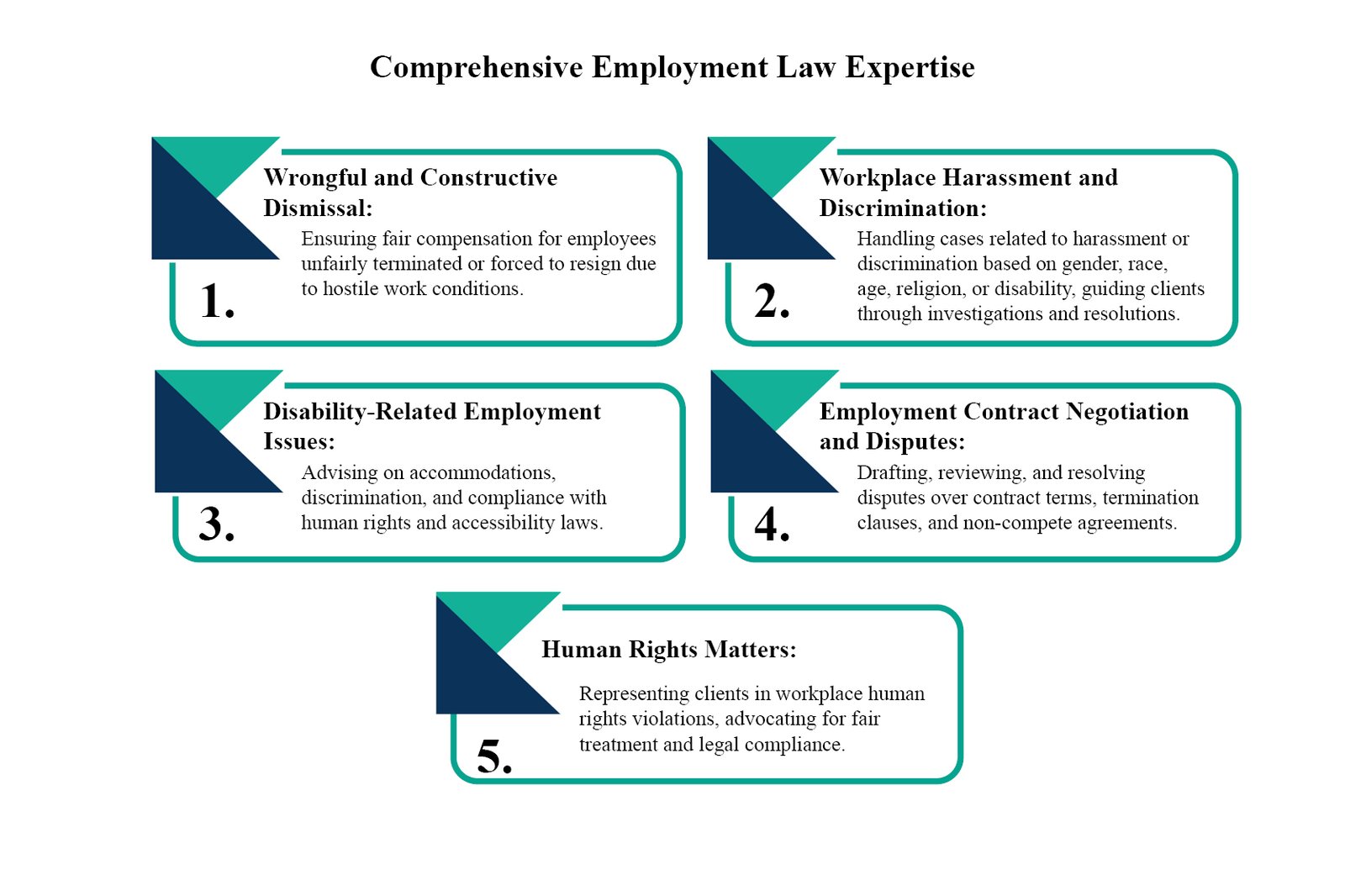
HTW Law has been serving the Greater Toronto Area for over 20 years, and is able to handle employment-related issues in Ontario. The practice of the firm covers the wrongful and constructive termination of employees and severance agreements including sexual harassment, as well as discrimination and retaliation. It also handles HRTO and OLRB cases and other human rights-related issues. The firm helps in certain cases that involve federally-regulated employees in Canada.
It’s not always simple to classify workplace conflicts. A dispute over working conditions may turn into an allegation of harassment, significant change in employment, or even a termination.
Knowing the events that led to the end of an employee’s day could be as crucial as knowing what actually happened.